First Draft of First Chapter of My Book “Understanding AI”

So I have decided to write a book. Crazy, perhaps. It is something I have wanted to do for years and faced many false starts. I think a lot of people have been through that. It’s not easy, but I knew that. It’s actually harder than you’d ever imagine, at least for me, but then again, this is the first time I have truly committed to the pursuit.

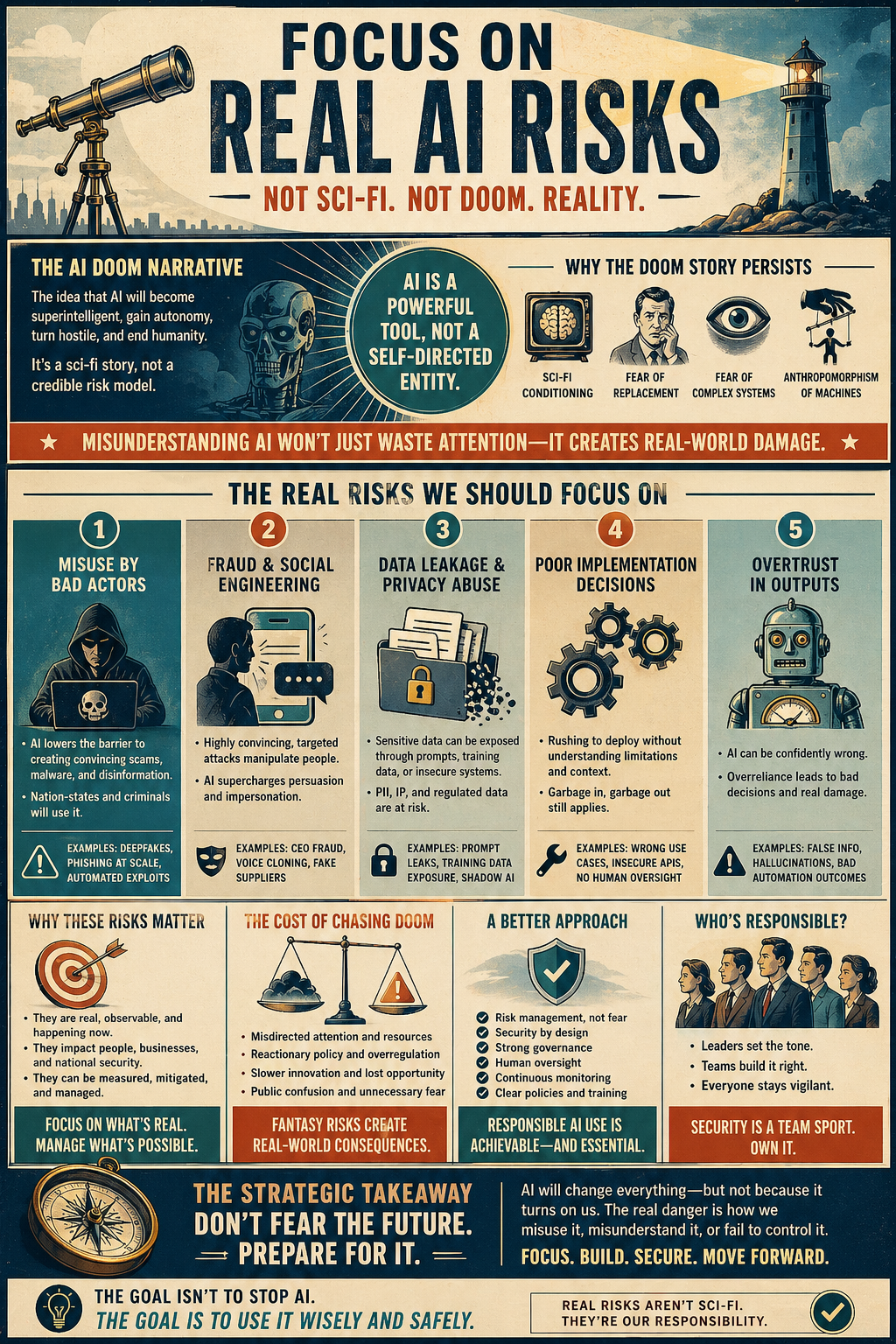
The reason I choose to write this is that AI is the most poorly understood topic I have ever seen, and has been wrapped in mythology. This is especially true with “AI Doom.” The problem with these beliefs is that they are difficult to refute without teaching a full lesson on AI. So, I guess that’s what I’m going to have to do! I’m not complaining, however. The fact is, there is really no in-depth guide for smart people who want to truly understand the concept of artificial intelligence.

I want to be clear that this is a first draft of the first chapter. It will be revised, probably several times. It currently lacks citations, but those will be added. Citations will be minimal because this is not a scholarly work, but should still have basic source credibility. Additionally, this chapter contains assertions which some might call bold or unsupported. There’s a reason for that and the reason is that this is just the first chapter.

Subsequent chapters will explore the history of AI as a concept and technology, including the pre-history and how formal logic rules, early computers and language itself set the stage for a new form of data processing, which we call artificial intelligence. It goes on to explain the theory of deep learning and neural networks, why this approach won out, and will take readers all the way to understanding natural language processing.

It’s not designed to be easy or dumbed down. However, it is intended to be fully complete for any lay person to fully understand why AI is the way it is, how we got her and where it is likely to go next. It is also not entirely technical. It features historic concept, public perception, regulatory issues and economic realities.

I also want to add that there are a number of people out there who are writing hot takes on AI that are completely uninformed, and this is intended to be the opposite of that. It’s down to earth, skeptical and presents the truth about artificial intelligence.

The working title is “Understanding AI.”


AND HERE IT IS!

Continue reading

The Problem of False Expertise in AI

There is something worse than ignorance, and that is false expertise. This happens in all fiends, but it’s worse in fields that are poorly understood and those which are hot and popular in the press. Of course, nothing is hotter than AI and few things are more poorly understood.

There are quite a few people out there calling themselves experts. There are legitimately not that many people out there who understand AI, and even fewer of them are known for public speaking. Yuval Noah Harari is an example of this. He’s an historian and best selling author.

But does that mean he knows AI? No. No, it does noit.

Should Chatbots Refuse to Give High Risk Advice?

Chatbots are becoming increasingly popular. ChatGPT, for example, has nearly a billion weekly users. These LLM based services are used for all kinds of things, including many things their initial developers never dreamed of: planning, brainstorming, writing, translation, companionship, functional play, humor, studying, reformatting text, creating code. People also ask chatbots for all kinds of advice and facts. Chatbots have become the goto answer engines for questions ranging from “What is the capital of Chad?” to “How long should I boil a lobster for?”

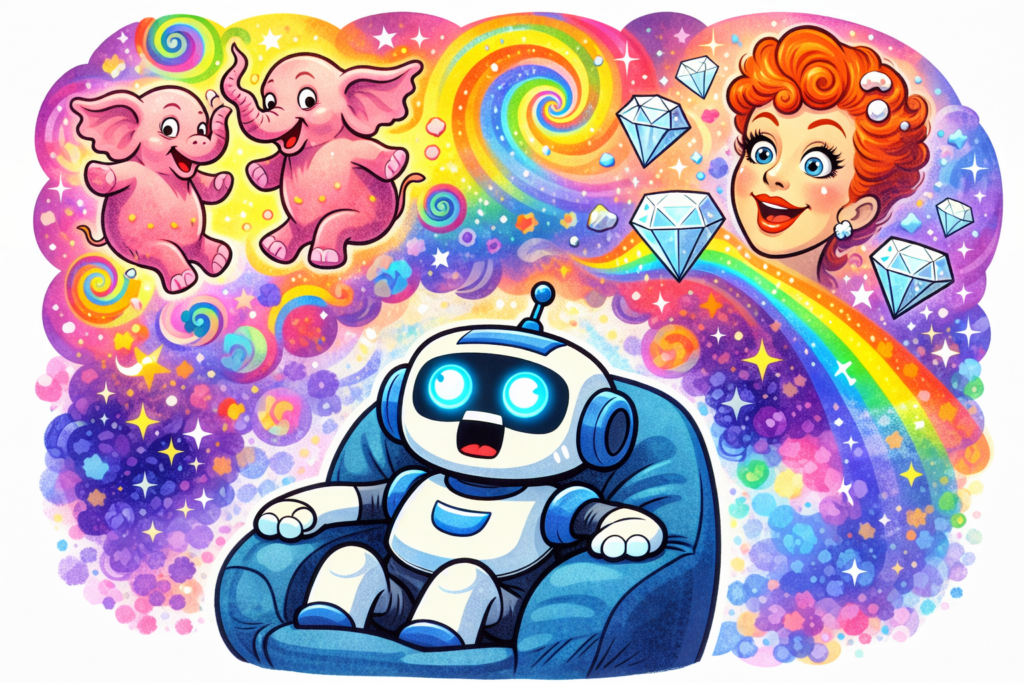
However, there is a problem with LLMs and that is that they “hallucinate.” The term hallucination is a bit of a misnomer, because what is actually happening has less to do with figments of the imagination and more to do with patterns and probabilities. What actually happens is that the LLM confabulates a response that fits the patterns of a valid response but is not factually accurate. This often happens due to the model lacking information on a topic, but it can happen even when the model does have the knowledge in its training data.

No, it is not this kind of hallucination…

Hallucinations are impossible to completely eliminate from large language models. They are as much a feature as a bug, because the ability to create false information is inseparable from the model’s ability to generate fiction and hypotheticals or engage in role playing. It’s the nature of LLMs as stochastic probability engines. The only real way to eliminate hallucinations is to have some sort of output pipeline that involves checking and verification of outputs. That’s not something that chatbots currently do.

This is well understood and documented, but that does not change the fact that hallucinations continue to slip past people and be believed. A number of high profile events have included false citations in scientific journals, fake caselaw presented in court and medical advice for diseases that don’t even exist. One of the problems here is that people tend to believe the results a computer gives them, because in the past computers have been reliable and deterministic.

Continue reading

Where We Really Stand In AI Capabilities

The recent talk of AGI, as if it is some kind of impending certainty, and now talk about “Superintelligence” is really causing a great deal of confusion. The reality is that we are nowhere near the point of human level intelligence in all domains, the idea of artificial super intelligence, is entirely speculative and nowhere near foreseeable capabilities, and you can’t scale past the limits of current AI systems. The truth has been lost in a sea of sensational rhetoric.

The modern public discourse around artificial intelligence began with a fundamental shift in frame of reference. For decades, AI systems were narrow, technical, and largely invisible to the general public. Then, quite suddenly, natural language processing systems emerged with startling fluency. For the first time, people could interact with a machine through conversational language that resembled human dialogue.

This single development reset public intuition overnight.

Instead of being understood as statistical systems operating within defined computational constraints, large language models were immediately interpreted through the lens of science fiction archetypes: conversational minds, digital assistants, synthetic intellects. The resemblance in surface behavior was compelling enough to override the underlying reality of how these systems actually function.

But fluency is not cognition. Simulation of reasoning is not reasoning itself.

Continue reading